

- An ICP score for every contact
- A Target account field for companies
- A Deal stage synced from your CRM
Create a custom field
1. Open a contact or company view
Open Contacts if the field belongs to a person, or Companies if it belongs to a company.2. Click Add column
Click Add column at the end of the table, then select Create new field: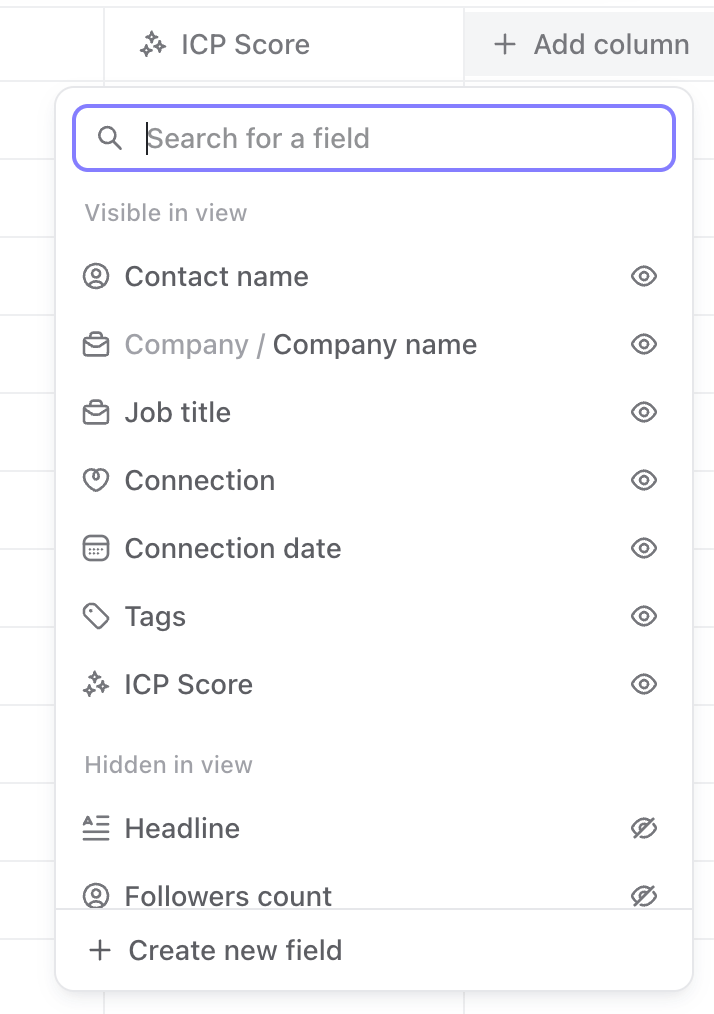
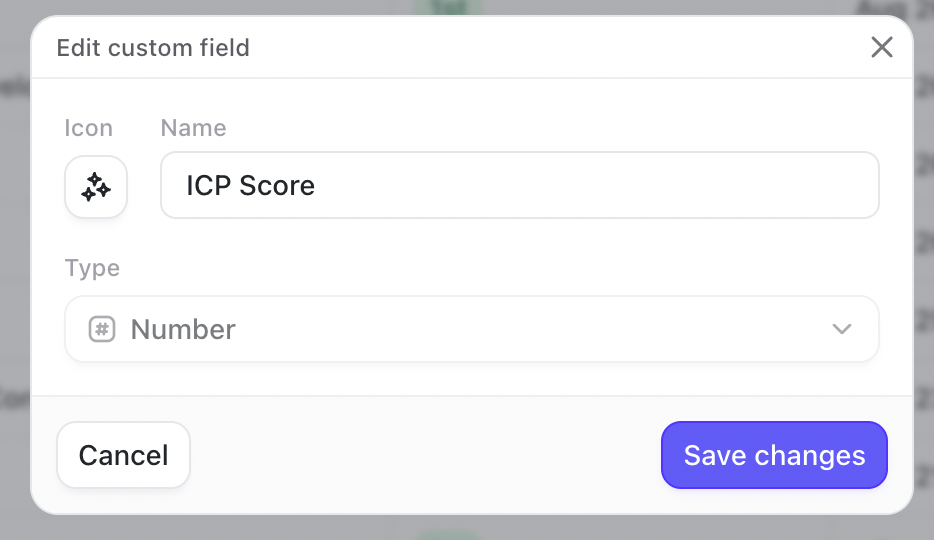
3. Choose its name, icon, and type
TalkToHumans supports four field types:
Pick the type carefully. You can rename a field or change its icon later, but you cannot change its type after creating it.
Only organization admins can create, edit, or delete custom fields.
4. Create the field
Click Create field. The field is added as a visible column in your current view. It also becomes available everywhere else that supports fields, even if it is hidden there by default. You can also create fields with the API or MCP.Add values to custom fields
Custom field values can currently be written only through the TalkToHumans API or MCP. This is useful for data coming from your CRM, Clay, a spreadsheet workflow, an internal tool, or an AI process. For example, an AI workflow can score every contact against your ICP, then write the result to an ICP score field. See MCP, update contact by API, or update company by API.Edit or delete a custom field
Open a contact or company view where the field is visible, click its column header, then select Edit field or Delete field.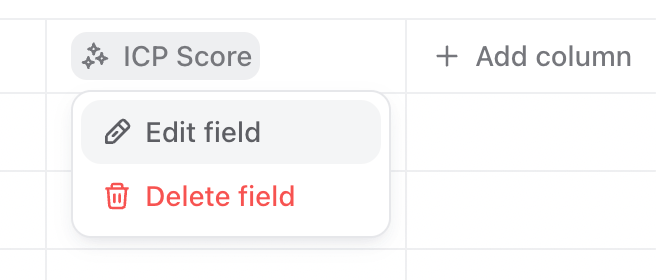
Deleting a custom field cannot be undone. If you only want it out of one view, hide the column instead.